Realistic Tattoos in Rome
I’m Elisa, in art Sun7: a tattoo artist specialising in realism and micro-realism in Rome. I turn photographs, memories and inner images into tattoos that feel alive — pieces drawn to measure, never repeated on anyone else.
The style
What a realistic tattoo actually is
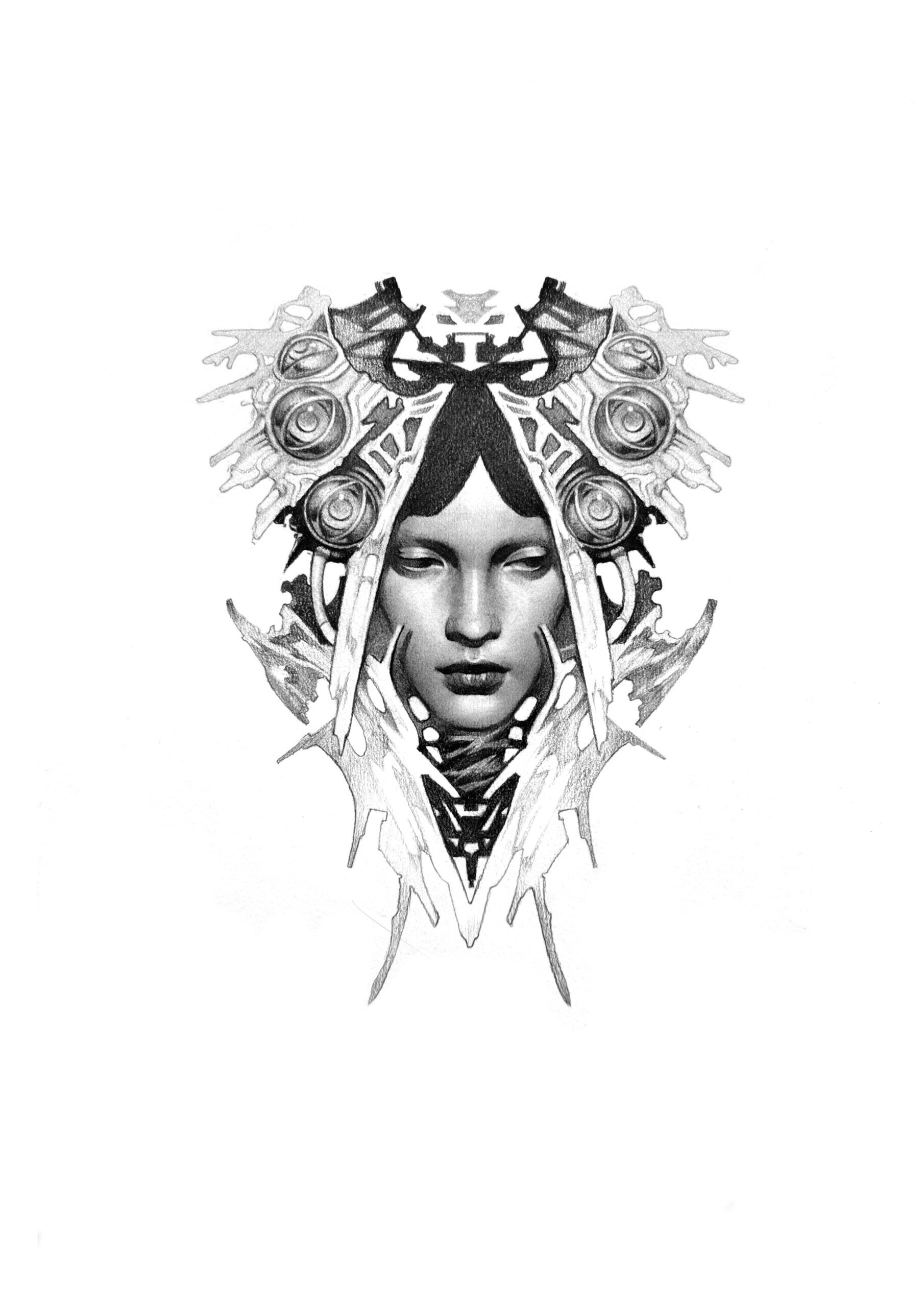
A realistic tattoo reproduces a subject on the skin as it exists in reality: a face, an animal, an object, a photograph you’re attached to. Unlike traditional styles, there is no black outline here. Volume comes purely from the relationship between light and shadow, exactly as in a pencil drawing or an oil painting.
That’s why realism is considered one of the most technical styles: every gradient has to be built in the right place and at the right depth, accounting for how the skin will age over the years. My academic background in Fine Arts — years of life drawing, colour theory and oil painting — is exactly what this work rests on.
The difference
Realism and micro-realism
Micro-realism applies the same logic at a reduced scale, often just a few centimetres. It calls for very fine needles and a different density of detail, because the drawing has to stay readable even as the ink spreads slightly under the skin over time.
Not every subject works in micro. During the consultation I’ll tell you honestly whether the idea you have in mind will hold at the size you want, or whether it’s worth rethinking the proportions: I’d rather lose an appointment than make a piece that can’t be read in five years.
What I work in
The styles
Realistic portraits
faces of people, of animals, family photographs
Micro-realism
small realistic subjects, in black or colour
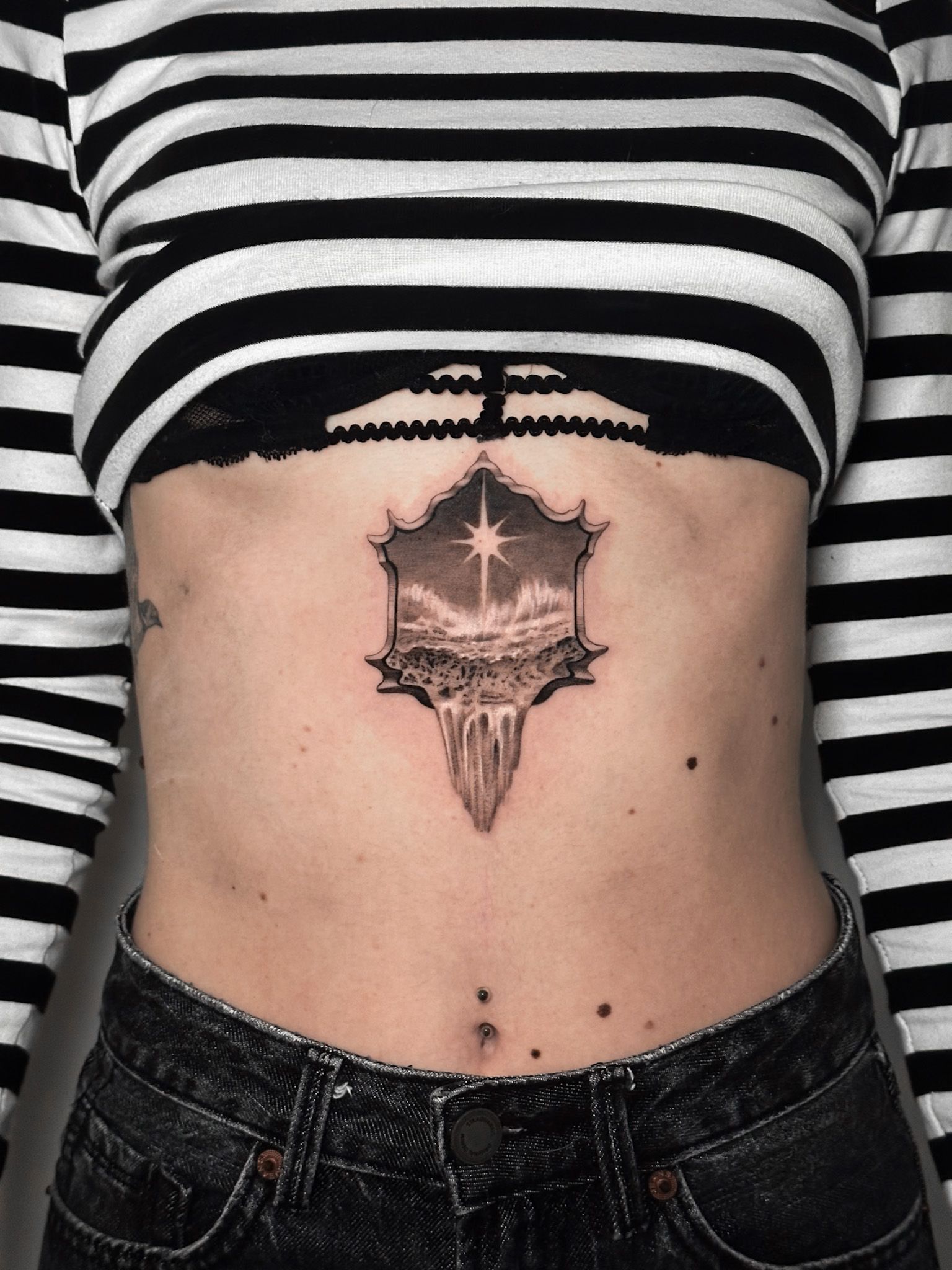
Black & grey
realism built entirely on a greyscale
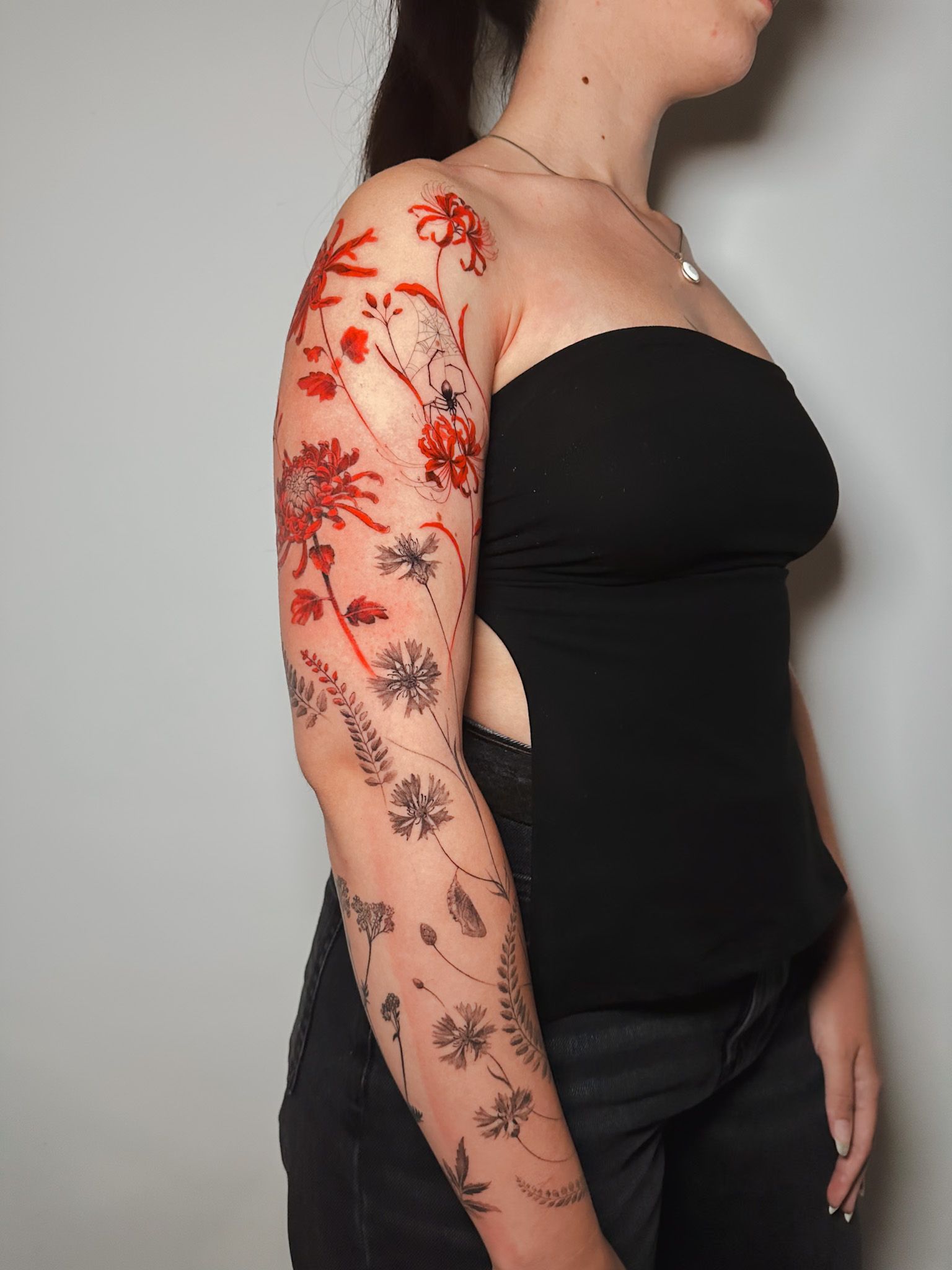
Colour realism
where the painting background counts most: chromatic balance and vivid colours that stay that way
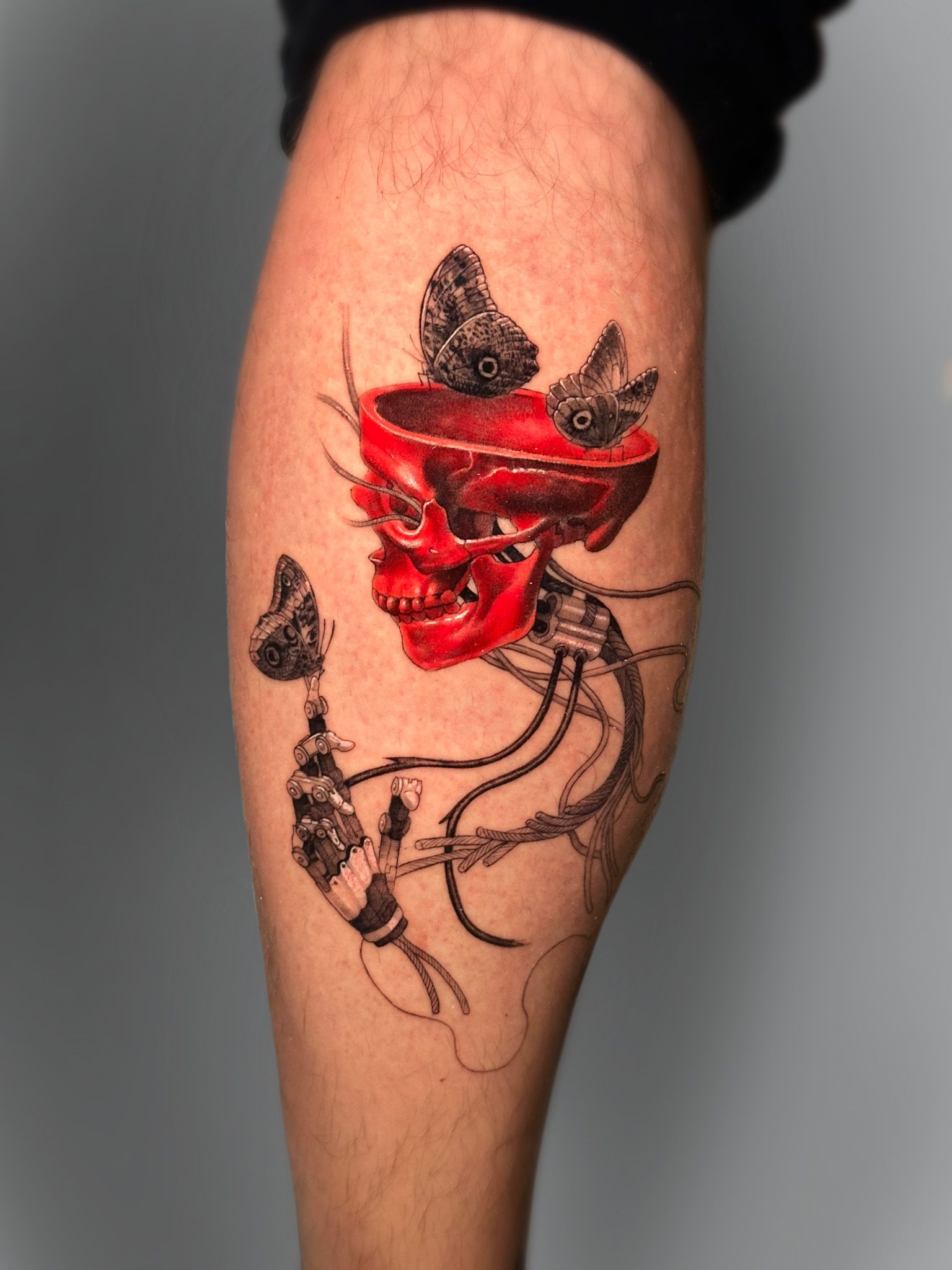
Cyberpunk & biomechanical
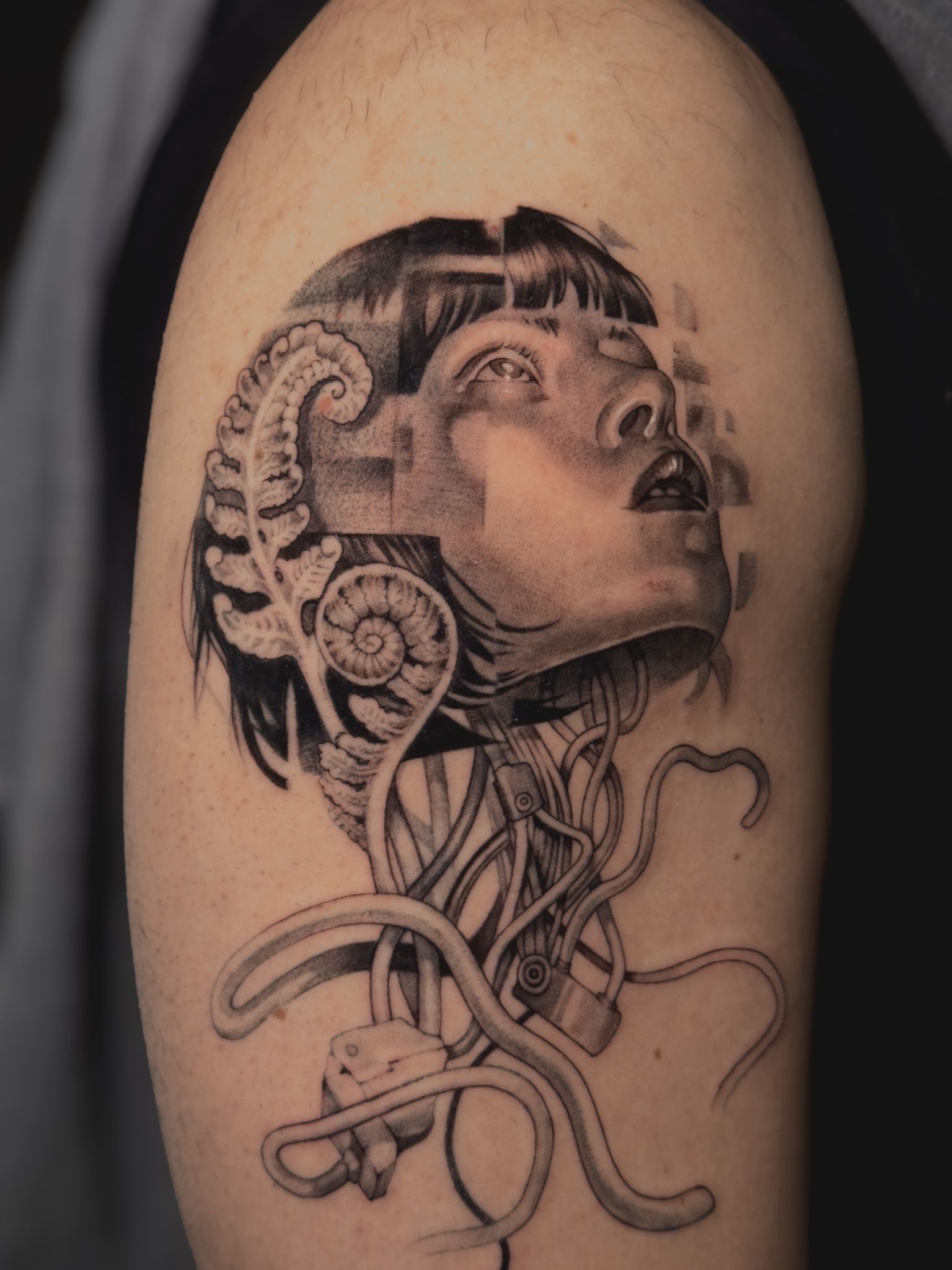
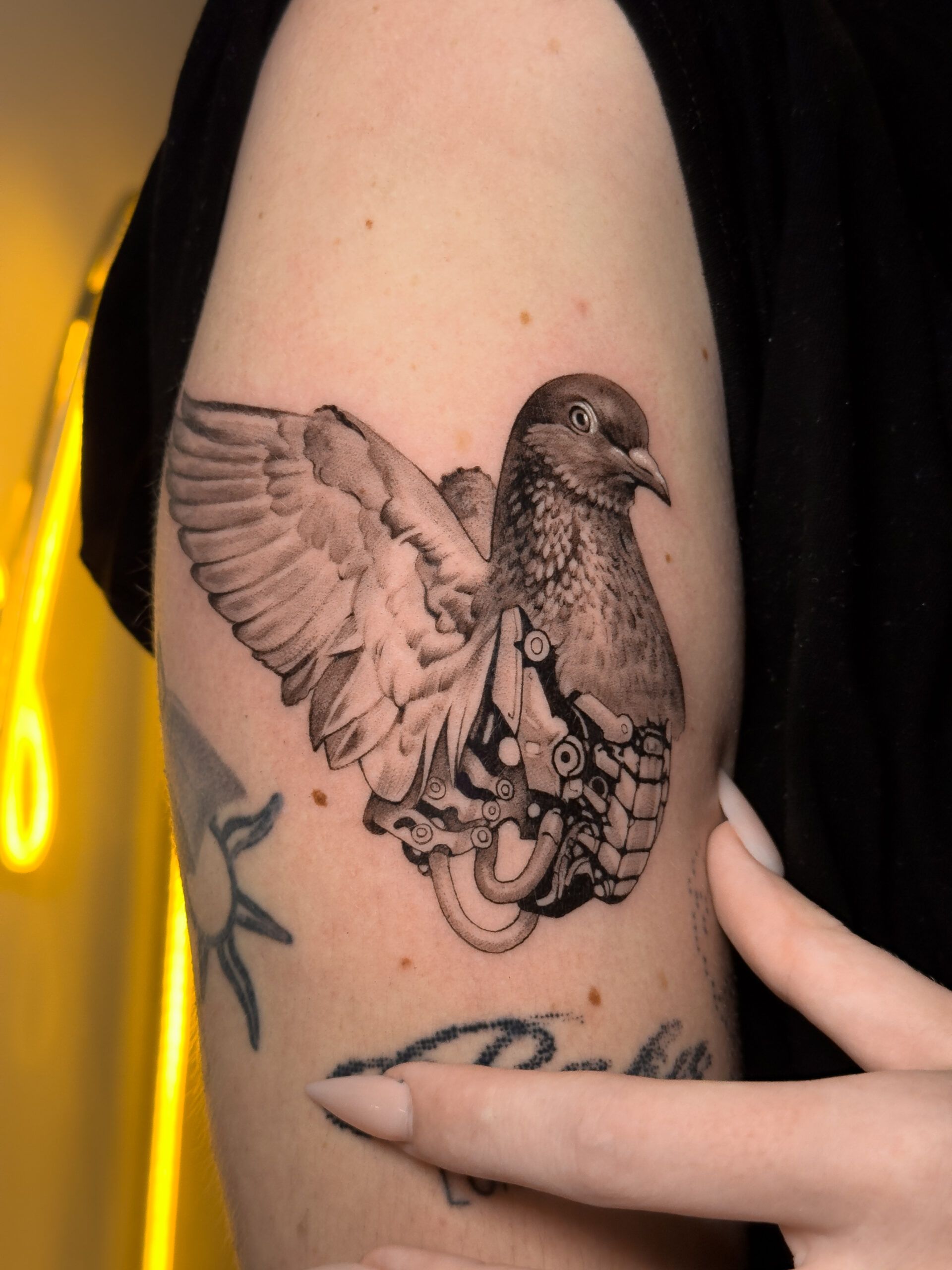
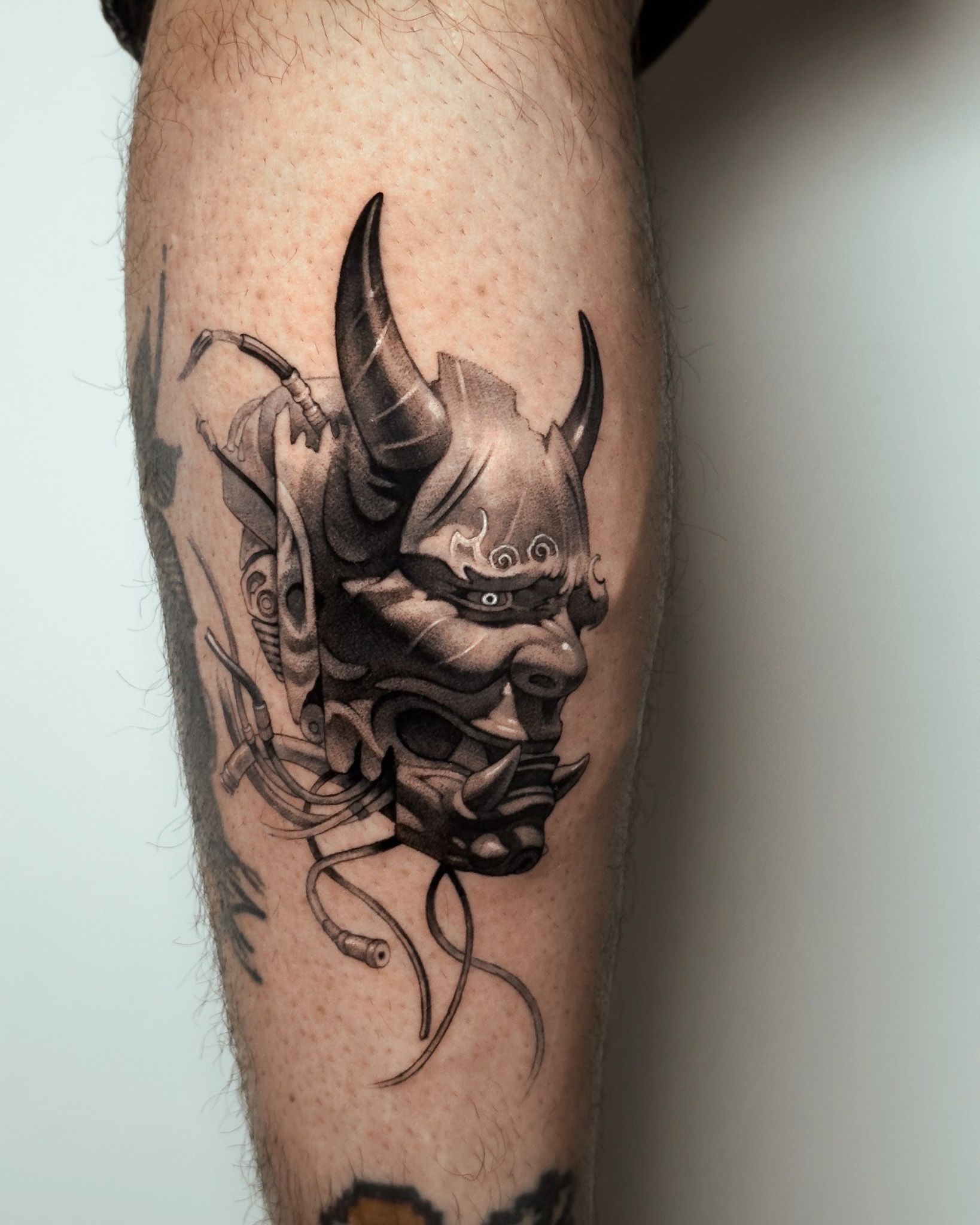
realism crossed with mechanical and digital elements
Surreal
compositions joining real elements into impossible images
The process
How a custom tattoo comes together
The request
You message me on Instagram with your idea, any reference images, a rough size in centimetres and the placement on the body.
The consultation
For complex or large projects we meet at the studio: this is where the idea really takes shape. It isn’t mandatory, but I recommend it.
The quote
Price depends on size, placement, level of detail and the time required. I don’t work to standard rates, because no project is standard.
Deposit & date
The appointment is secured with a deposit of between €50 and €150, which is then deducted from the total.
The design
I prepare the project and send it over a few days ahead, so there’s time for small adjustments.
The session
Arrive rested and having eaten. I’ll handle the rest.
Selected work
FAQ
Frequently asked questions
How much does a realistic tattoo in Rome cost?
There is no price list. The quote takes into account the size, the part of the body, how much detail is involved and the hours of work required. Write to me with your idea and I’ll give you a precise figure before any commitment.
How many sessions does it take?
A micro-realism piece almost always finishes in one session. A medium-sized portrait may take one or two. A large project, like a sleeve, is built across several sessions spread over time, leaving the skin time to heal in between.
Can I bring a photograph?
Yes — and for a portrait it’s the best possible starting point. The sharper and better lit the image, the more faithful the result: you can’t recover a detail from a blurry photo that isn’t there.
Parli italiano?
Sì, l’italiano è la mia lingua — but the whole process works just as well in English. I work regularly with visitors and clients living abroad. If you’re travelling to Rome and want a piece to remember it by, write to me well in advance so we can plan the design and reserve a date.
Book
Book your tattoo
I work by appointment, at the studio in Rome. The first step is always a message: tell me your idea and we’ll build the rest from there.